
Best Backpacking Coffee Makers Under $75 (2026)
Best backpacking coffee makers under $75 in 2026: the AeroPress Go wins overall, plus the 0.4 oz GSI Java Drip, MSR MugMate, MiiR Pourigami and Nanopresso.
In this guide
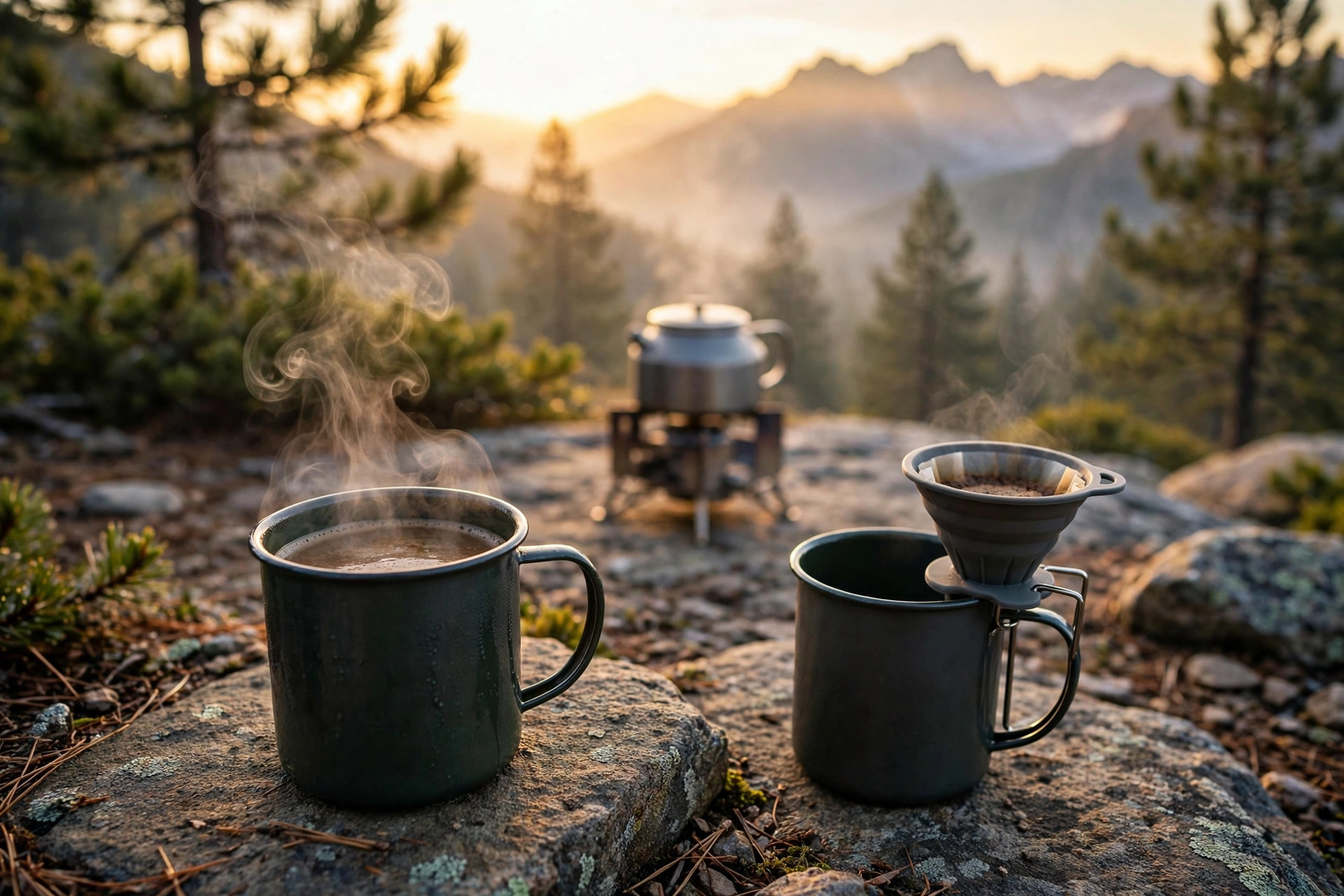
After cross-checking October 2026 independent tests from Clever Hiker, REI’s testing team, Treeline Review, and Outdoor Gear Lab, the AeroPress Go ($50) is the best backpacking coffee maker for most hikers — an 11.5-ounce kit that presses a rich, clean cup in about a minute and packs into its own mug. The GSI Outdoors Ultralight Java Drip (~$13) is the best ultralight pick at 0.4 ounces, the MSR MugMate ($25) is the simplest, the MiiR Pourigami ($35) tastes best, and the Wacaco Nanopresso (~$70) pulls real espresso.
Disclosure: Trail Tested is reader-supported. When you buy through links on this page, we may earn a commission at no extra cost to you. Learn more. All picks are compiled picks — see how we rate gear.
Contents
- Best Overall: AeroPress Go
- Best Ultralight: GSI Outdoors Ultralight Java Drip
- Best for Taste: MiiR Pourigami
- Best Budget Simplicity: MSR MugMate
- Best Espresso: Wacaco Nanopresso
- Coffee makers comparison table
- How we picked
- Tested & dismissed
- The sub-1-pound coffee kit
- FAQ
- Related guides
Our top picks
Best Overall: AeroPress Go — $50
Check price- Price: $50
- Weight: 11.5 oz complete (brewer itself ~5.6 oz; the rest is mug, case, and accessories)
- Brew type: Immersion press
- Capacity: 1–2 cups (8 fl oz per press)
- Filter: Paper micro-filters (supplied; pack extras pre-counted)
- Best for: Hikers who want the best-tasting trail coffee without fuss
What we like:
- The best-tasting cup in independent 2026 testing — rich, clean, zero sludge, ready in about a minute
- Packs into its own leak-proof travel mug with lid, scoop, stirrer, and filter holder — one self-contained kit
- Practically indestructible; Clever Hiker’s testers rated it 4.9/5 and named it their overall winner
- Cleans with a rinse and a wipe — crucial when water is scarce
What we don’t:
- 11.5 ounces is real weight — the ultralight crowd will balk
- Paper filters are a consumable to pack, count, and keep dry
- One serving at a time; brewing for a partner means a second round
Why it’s a compiled pick: No other trail brewer wins on taste, speed, durability, and packability at once. REI’s 2026 testers pressed 65 cups across six states — and one tester said he’d give up his camp pillow to keep space for the AeroPress.
Best Ultralight: GSI Outdoors Ultralight Java Drip — ~$13
Check price- Price: ~$13
- Weight: 0.4 oz — lighter than the spoon you stir with
- Brew type: Pour-over (reusable nylon-mesh filter)
- Capacity: 1 cup
- Filter: Built-in mesh — no paper needed
- Best for: Ounce-counters who refuse instant coffee
What we like:
- Collapses flat and disappears into your cook kit at a tenth of a pound
- Reusable filter — zero resupply logistics on a long trail
- An REI tester with pour-over experience at home said he couldn’t tell its cup from his ceramic V60
- Cheapest real brewer here by a wide margin
What we don’t:
- Supported only by three leg clips — pour slowly or you’ll brace it with your hand as the hot water weighs it down
- Taste scores a notch below the AeroPress and Pourigami in head-to-head tests
- One cup, one hiker — no scaling up
Why it’s a compiled pick: At 0.4 ounces and ~$13, the Java Drip is the answer to “I want real coffee but I won’t carry real weight.” Every other ultralight option costs more, needs paper filters, or brews a worse cup.
Best for Taste: MiiR Pourigami — $35
Check price- Price: $35
- Weight: 4.9 oz dripper alone (5.5 oz with the slim carrying case)
- Brew type: Pour-over (stainless steel, 3 interlocking panels)
- Capacity: 1–2 cups
- Filter: Paper filters (supplied)
- Best for: Coffee nerds who pour at home and want the same ritual at camp
What we like:
- Top taste scores in Outdoor Gear Lab’s 2026 testing (9.0/10) — the gourmet pick of the pour-over field
- Stainless steel, no plastic touching your brew — a real selling point for taste purists
- Collapses into a slim case thinner than a paperback; panels rinse clean in seconds
What we don’t:
- Heavier than any other pour-over here — 12x the Java Drip’s weight
- Needs a practiced pour; sloppy technique gets a mediocre cup
- Paper-filter dependency, same as the AeroPress
Why it’s a compiled pick: If flavor is the whole point and you’ll carry 5 ounces for it, nothing else here matches the Pourigami’s cup. It’s for the hiker who treats the sunrise pour as part of the trip — not a chore.
Best Budget Simplicity: MSR MugMate — $25
Check price- Price: $25
- Weight: ~1.0 oz with the lid/coaster (filter alone ~0.7 oz)
- Brew type: Steep (stainless-mesh basket sits in your mug)
- Capacity: 1 cup
- Filter: Built-in stainless mesh — doubles as a tea filter
- Best for: Hikers who want coffee with zero moving parts
What we like:
- Dead simple: drop it in the mug, add grounds, pour water — no technique, no assembly
- Stainless mesh means nothing to resupply and it lasts for years
- Doubles as a loose-leaf tea filter — two kit items in one
- At an ounce, the weight penalty is a rounding error
What we don’t:
- Steeped coffee has more body but less clarity than press or pour-over
- Fine grinds slip through and leave sludge — use a coarse grind
- Cup quality trails the AeroPress and Pourigami by a clear step
Why it’s a compiled pick: The only pick with zero learning curve and zero consumables. For beginners or anyone who’d rather watch the sunrise than fuss with a brew method, it’s the cheapest upgrade from instant coffee to real coffee — and it fits any mug you already own.
Best Espresso: Wacaco Nanopresso — ~$70
Check price- Price: ~$70
- Weight: ~11.8 oz (336 g)
- Brew type: Manual espresso (up to 18 bars)
- Capacity: One double shot (~2.7 oz) per pump session
- Filter: Built-in portafilter basket — no paper
- Best for: Espresso addicts who won’t settle for “strong coffee”
What we like:
- The only trail brewer that makes actual espresso with genuine crema — up to 18 bars of pressure, no electricity
- No paper filters, no consumables beyond the coffee
- Hand-pump design has nothing electronic to fail
What we don’t:
- Pumping takes real effort and a couple of minutes — your trail partners will be drinking already
- Heaviest single-purpose brewer here, and it only makes espresso
- Needs a fine espresso grind; pre-ground drip coffee won’t cut it
Why it’s a compiled pick: Nothing else here even attempts espresso. If your mornings require a real shot — not a strong Americano, not “espresso-style” — the Nanopresso is the entire category. Everyone else should save the weight and buy the AeroPress.
Coffee makers comparison table
| Brewer | Price | Weight | Brew type | Capacity | Filter |
|---|---|---|---|---|---|
| AeroPress Go | $50 | 11.5 oz (complete) | Press | 1–2 cups | Paper |
| GSI Ultralight Java Drip | ~$13 | 0.4 oz | Pour-over | 1 cup | Reusable mesh |
| MiiR Pourigami | $35 | 4.9 oz | Pour-over | 1–2 cups | Paper |
| MSR MugMate | $25 | ~1.0 oz | Steep | 1 cup | Reusable mesh |
| Wacaco Nanopresso | ~$70 | ~11.8 oz | Espresso | 1 double shot | Built-in basket |
How we picked
We scored every contender on the seven things that decide whether a trail brewer gets used or gets left in the gear bin:
- Taste on trail: The cup has to be worth the weight. We leaned on October 2026 head-to-head taste scores from Clever Hiker, REI’s test team, and Outdoor Gear Lab — not marketing copy.
- Weight honesty: Ounces are the currency. We used complete-kit weights, not just the brewer, because that’s what you actually carry.
- Brew time: Morning miles are waiting. Press-and-pour options beat slow rituals for most hikers.
- Cleanup and water use: Rinse-and-go designs beat ones that need scrubbing — the best brewer works on a 5-ounce water margin.
- Durability: Trail gear gets dropped on rocks. Polypropylene, steel mesh, and solid stainless outrank glass and fussy assemblies.
- Filter logistics: Paper filters are a consumable to pack and keep dry; reusable mesh is one less thing to manage. The trade-off is stated, not hidden.
- Price ceiling: $75 was a hard line, checked against October 2026 street pricing. Several fine brewers died at this step.
All specs are manufacturer-listed and cross-checked against October 2026 independent tests and aggregated buyer reviews. We don’t claim hands-on testing — this guide is research-compiled from verified specs and independent test data, and every pick carries an honest drawback so you know the trade-offs before you buy.
Tested & dismissed
- Stanley Classic Stay Hot French Press ($70, 2.5 lbs): Makes a fine 6-cup French press — for car camping. At two and a half pounds it weighs more than most backpacking tents. Wrong tool for the backpack.
- Hario V60 Plastic Dripper 02 ($14, 3.5 oz): Café-quality pour-over and the cheapest real brewer tested, but it scores poorly on trail portability: the cone sits awkwardly on camp mugs and it drinks paper filters. The Java Drip does the same job at a tenth of the weight.
- GSI Collapsible JavaDrip ($17, 4.8 oz): A decent 2-cup collapsible pour-over — killed by its own sibling. Twelve times the weight of the Ultralight Java Drip for the same single cup of coffee. No reason to pick it here.
The sub-1-pound coffee kit
Whichever brewer you pick, the supporting kit is the same:
- Coffee: Pre-grind to the brewer’s spec (fine for press/espresso, medium for pour-over, coarse for the MugMate). Pack grounds in a zip bag, pre-measured.
- Water: Budget 8 extra ounces per cup. Coffee is the number-one reason hikers run their bottles dry before lunch — plan the refill stop.
- Trash bag: A small zip bag for used grounds and filters. Never dump grounds on the ground.
With the GSI Java Drip, your entire coffee system beyond the stove and mug weighs 0.4 ounces. With the AeroPress Go, it’s 11.5 ounces and the best cup you’ll drink all trip. Both are correct answers — they just answer different questions.
FAQ
What’s the single best coffee maker to bring backpacking if I’m only buying one? The AeroPress Go ($50) is the safest single buy. It brews a rich, clean cup in about a minute, packs into its own mug, survives drops, and cleans with a rinse — press, pour-over, and espresso-style brewing in one kit. Ounce-counters who care more about weight than taste should pick the 0.4 oz GSI Ultralight Java Drip instead.
Is the AeroPress Go actually worth the weight on a thru-hike or multi-day trip? For taste-focused hikers, yes — 11.5 oz complete is less than a spare water bottle. For strict ultralight hikers, no: the GSI Ultralight Java Drip weighs 0.4 oz and makes a genuinely good cup. The real weight question isn’t the brewer, it’s the coffee itself — a week’s worth of grounds outweighs any of these brewers.
Do these trail coffee makers need paper filters, or are any of them reusable? The AeroPress Go and MiiR Pourigami need paper filters (pack them pre-counted in a zip bag). The GSI Ultralight Java Drip and MSR MugMate use built-in reusable mesh filters — nothing to resupply. If you hate carrying paper filters, the reusable-mesh options are the pick, with the trade-off being slightly less sediment-free coffee.
Can I make real espresso while backpacking, or just strong coffee? Only the Wacaco Nanopresso (~$70) makes real espresso on the trail — up to 18 bars of pressure for genuine crema. The AeroPress makes concentrated espresso-style coffee, but it doesn’t reach true espresso pressure. If espresso is the whole point of your mornings, the Nanopresso is the one; otherwise the AeroPress’s strong coffee satisfies most people.
How do I keep my backpacking coffee kit light and simple? Pick one brewer, pre-grind coffee to its spec (fine for press, medium for pour-over), and pack grounds in a zip bag plus a small trash bag for used grounds — never dump them on the ground. Budget 8 extra ounces of water per cup. With the GSI Java Drip, the coffee kit beyond your stove and mug is 0.4 oz.
Related guides
- Camp Kitchen, Water & Camp Gear hub — every stove, filter, and camp-comfort guide in one place
- Best Backpacking Stoves for Cold Weather — the heat source your coffee kit depends on
- Best Water Filters for Group Backpacking — because coffee needs water first
Heads up: some links on this page are affiliate links — if you buy through them we may earn a commission at no extra cost to you. Learn more.
Frequently asked questions
What's the single best coffee maker to bring backpacking if I'm only buying one?
The AeroPress Go ($50) is the safest single buy. It brews a rich, clean cup in about a minute, packs into its own mug, survives drops, and cleans with a rinse — press, pour-over, and espresso-style brewing in one kit. Ounce-counters who care more about weight than taste should pick the 0.4 oz GSI Ultralight Java Drip instead.
Is the AeroPress Go actually worth the weight on a thru-hike or multi-day trip?
For taste-focused hikers, yes — 11.5 oz complete is less than a spare water bottle. For strict ultralight hikers, no: the GSI Ultralight Java Drip weighs 0.4 oz and makes a genuinely good cup. The real weight question isn’t the brewer, it’s the coffee itself — a week’s worth of grounds outweighs any of these brewers.
Do these trail coffee makers need paper filters, or are any of them reusable?
The AeroPress Go and MiiR Pourigami need paper filters (pack them pre-counted in a zip bag). The GSI Ultralight Java Drip and MSR MugMate use built-in reusable mesh filters — nothing to resupply. If you hate carrying paper filters, the reusable-mesh options are the pick, with the trade-off being slightly less sediment-free coffee.
Can I make real espresso while backpacking, or just strong coffee?
Only the Wacaco Nanopresso (~$70) makes real espresso on the trail — up to 18 bars of pressure for genuine crema. The AeroPress makes concentrated espresso-style coffee, but it doesn’t reach true espresso pressure. If espresso is the whole point of your mornings, the Nanopresso is the one; otherwise the AeroPress’s strong coffee satisfies most people.
How do I keep my backpacking coffee kit light and simple?
Pick one brewer, pre-grind coffee to its spec (fine for press, medium for pour-over), and pack grounds in a zip bag plus a small trash bag for used grounds — never dump them on the ground. Budget 8 extra ounces of water per cup. With the GSI Java Drip, the coffee kit beyond your stove and mug is 0.4 oz.